How Nomads Protect Themselves from Sun, Sand & Wind (and Why Tagelmust Scarves Matter)
Share
In desert environments, long distances or terrain aren't the main threat, it's exposure.
Sun, wind, and airborne sand steadily degrade the body through dehydration, heat stress, eye irritation, and respiratory strain. That's why nomadic clothing systems evolved to mitigate these risks using simple, adaptable solutions rather than specialized gear.
This article explains how nomads protect themselves from environmental exposure, and why layered textiles, long dresses and especially Tagelmust scarves, remain central to desert survival.
The Three Primary Environmental Threats
1. Solar Radiation
Direct sun exposure causes:
rapid dehydration;
heat exhaustion;
sunburn, and;
impaired concentration
The desert offers little natural shade, making continuous protection absolutely necessary.
2. Wind
Wind accelerates three critical factors:
moisture loss during daytime;
heat loss at night, and;
sand abrasion on skin.
Even mild wind becomes harmful over long exposure periods.
3. Sand and Dust
Fine sand particles, combined with wind speed create a plethora of problems:
irritate eyes;
inflame airways;
damage skin, and;
reduce visibility
Protection must be adjustable, breathable, and quickly deployable.
Why Nomadic Clothing Covers More Skin, Not Less
Counterintuitive but Effective
Unlike modern assumptions, exposing skin does not improve cooling in the desert. Loose, layered clothing:
blocks direct sunlight
traps a thin layer of cooler air
reduces sweat evaporation
stabilizes body temperature
Covered skin loses moisture more slowly.
The Scarf as a Modular Protection Tool
Why Tagelmust Scarves Are Central
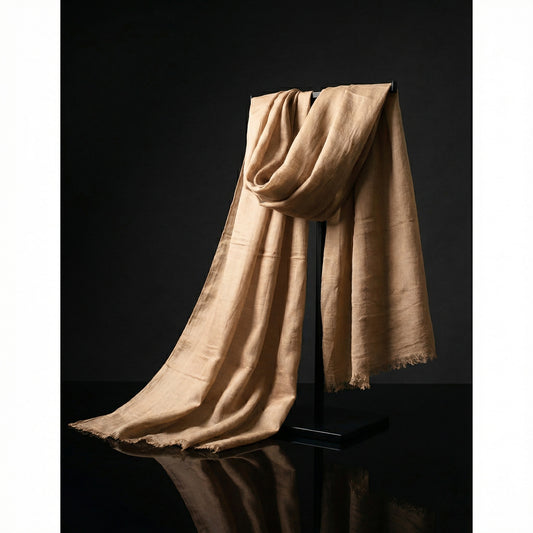
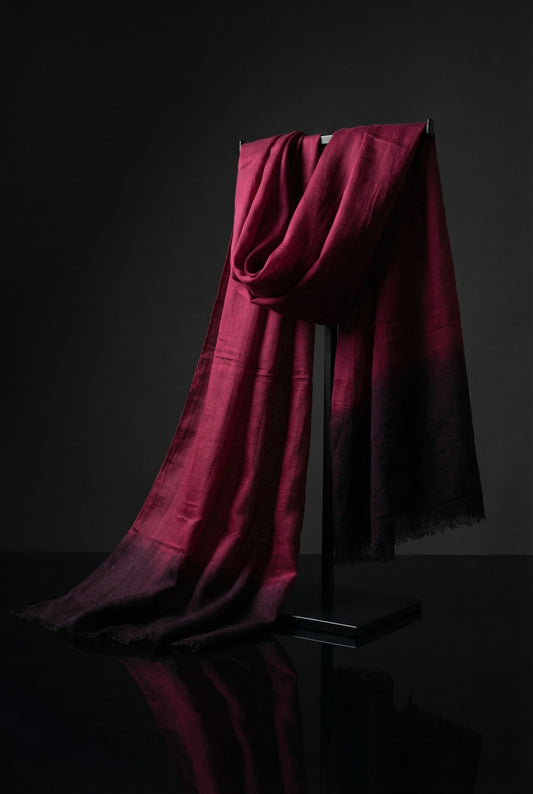
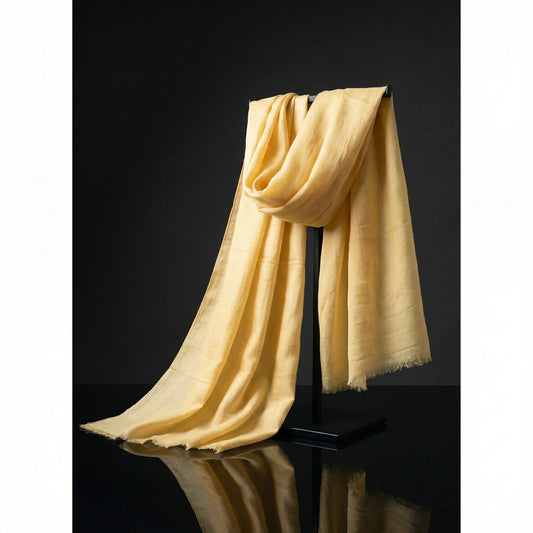
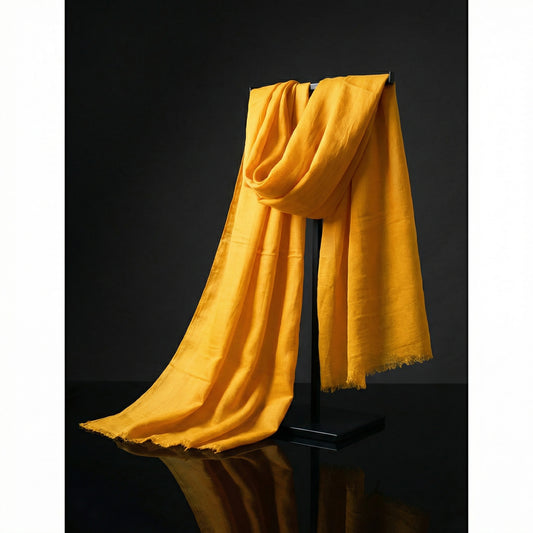
Tagelmust scarves are effective because they are lightweight, breathable, and multi-functional.
With it's typical length of 3-5 meters (about 16 feet), a single extra long Tagelmust can protect the head, neck, face and shoulders, and can be adjusted in minutes based on weather conditions.
Face and Airway Protection
When wind lifts sand, scarves cover forehead, ears, nose and mouth. The lightweight fabric filters large particles and makes breathing so much easier, and limits sensory fatigue during long travel.
Why Fabric Choice Matters
Breathability Over Thickness
Effective desert scarves are:
tightly woven, but breathable
light in weight
capable of drying quickly
Heavy fabrics trap heat and moisture, increasing discomfort.