Tagelmust vs Shemagh vs Keffiyeh: What's the Difference?
Tagelmust vs Shemagh vs Keffiyeh: What's the Difference?
Three garments. Three distinct cultures. One shared desert wisdom. If you have ever found yourself trying to understand the difference between a Tagelmust, a Shemagh, and a Keffiyeh, you are not alone. These iconic head and face coverings are often grouped together — and while they share a functional family resemblance, they come from different places, different peoples, and carry very different meanings.
This guide explains each one clearly and respectfully, so you can understand what makes each unique — and make an informed choice if you are considering wearing one.
The Tagelmust: The Veil of the Tuareg
Origins
The Tagelmust comes from the Tuareg people — the Berber nomads of the Sahara, whose ancestral lands span Mali, Niger, Algeria, Libya, and Burkina Faso. It has been worn for at least a millennium, likely much longer, and remains central to Tuareg identity today.
What it looks like
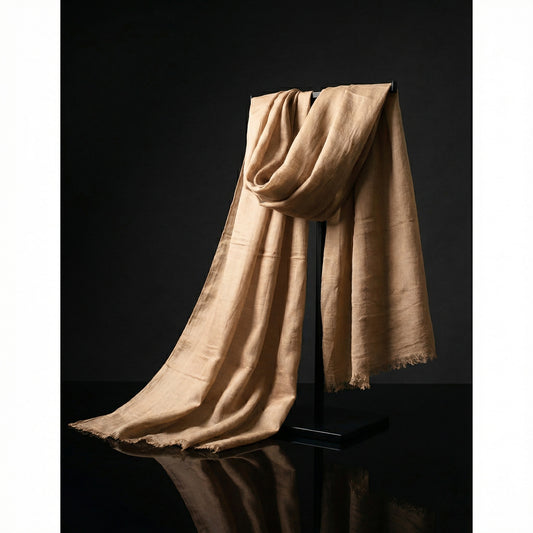
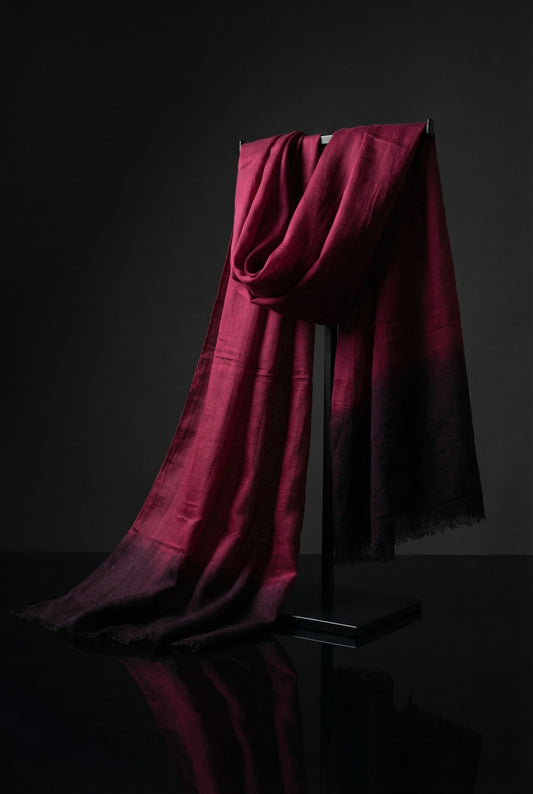
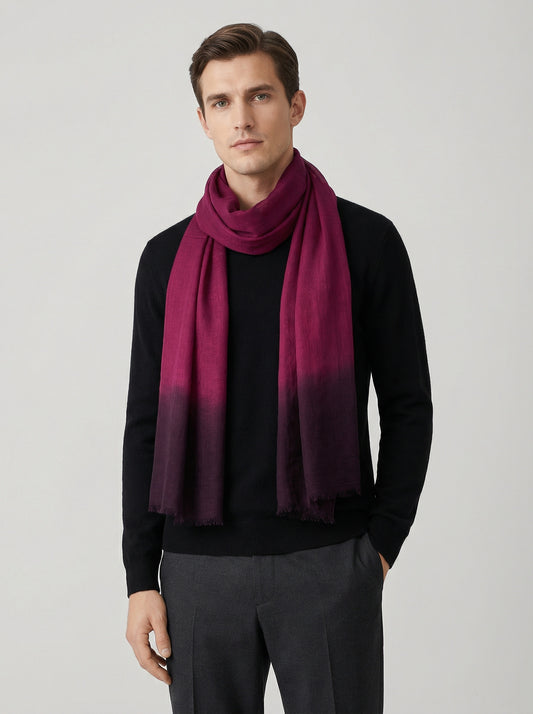
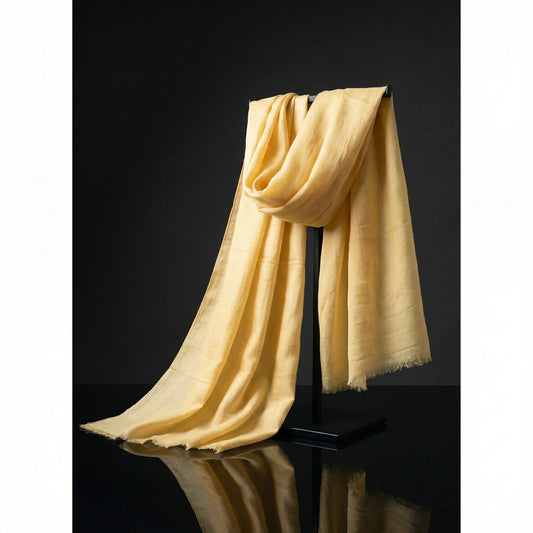
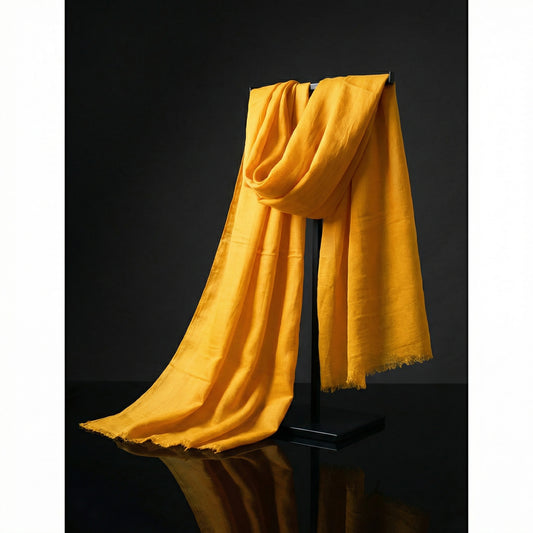
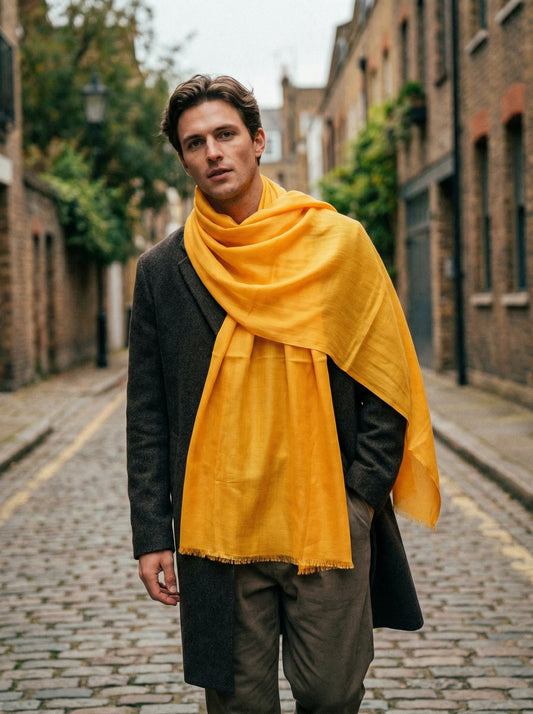
A Tagelmust is typically a very long piece of fabric — traditionally between four and ten meters — wound carefully around the head and across the face, leaving only the eyes visible. It is most traditionally made in indigo-dyed fabric, though modern versions come in many colors and materials.
How it is worn
The Tagelmust is wound in a specific layered technique that creates both head coverage and a face veil in a single continuous wrap. The result is a structured but comfortable covering that stays in place even in desert winds. Among the Tuareg, men wear the veil; women traditionally do not.
Cultural significance
Among the Tuareg, the Tagelmust is not simply clothing — it is a marker of adulthood, social status, and respectful conduct. The position of the veil (higher or lower across the face) communicates different levels of formality and deference. The deeply indigo-dyed versions earned their wearers the name "Blue Men of the Sahara."
Practical qualities
- Length: 4–10 meters (traditional), shorter modern versions available
- Fabric: traditionally cotton or cotton-blend, now also rayon and silk blends for lightness
- Best for: full head and face protection, desert travel, cultural expression
- Unique feature: versatile continuous wrap — no separate headband needed
The Keffiyeh: The Cloth of the Levant
Origins
The Keffiyeh — also spelled Kufiya, Kafiya, or Ghutrah — is most commonly associated with the Palestinian people and the broader Arab Levant (modern-day Palestine, Jordan, Syria, and Lebanon). It has deep roots in agrarian and Bedouin culture across the region and became globally recognizable in the 20th century as a symbol of Palestinian national identity.
What it looks like
The classic Keffiyeh is a square cloth, typically 127cm × 127cm, made of cotton. The most iconic version is white with a black checked or fishnet pattern, though red-and-white versions are also common (associated particularly with Jordan). The cloth is folded diagonally into a triangle before wearing.
How it is worn
The Keffiyeh can be worn in multiple ways: draped loosely over the head and shoulders, folded and tied around the neck, or wrapped and secured with an Agal (the black cord ring). It does not typically create a full face veil, but can be pulled across the lower face in dusty conditions.
Cultural significance
The Keffiyeh carries significant political and cultural meaning, particularly since the mid-20th century. In Palestinian culture, it is a symbol of resistance and national identity. In the broader Arab world, it is widely worn as everyday headwear with regional variation in color and pattern.
Practical qualities
• Size: approximately 127cm × 127cm (square)
• Fabric: typically cotton
• Best for: light head covering, neck scarf, sun protection for face and neck
• Unique feature: iconic patterned weave, highly recognizable globally
The Shemagh: The Desert Soldier's Wrap
Origins
The Shemagh is the Keffiyeh's heavier, more utilitarian cousin. The word is used most commonly in Arabia and among military communities worldwide. It is widely worn across the Arabian Peninsula, Iraq, and Jordan, and has been adopted by military forces — particularly British and American units deployed in desert environments — as a versatile piece of field gear.
What it looks like
A Shemagh is typically larger and heavier than a Keffiyeh — usually around 110cm × 110cm to 127cm × 127cm — and is made from thicker cotton. It most commonly comes in the red-and-white or olive-and-khaki color combinations associated with military use. The weave is denser than a standard Keffiyeh.
How it is worn
The Shemagh is intended for robust protection. It is wrapped around the head and face in a way that can cover the nose and mouth completely, providing real defense against sand, wind, and cold. Its heavier fabric makes it more effective in harsh conditions but warmer in mild weather.
Cultural significance
While the Shemagh shares visual DNA with the Keffiyeh, its cultural associations have been shaped heavily by its military use. For many wearers in Western countries, it is primarily associated with outdoor adventure, survivalism, and military culture rather than with any specific ethnic or national identity.
Practical qualities
- Size: typically 110–127cm × 110–127cm (square, heavier than Keffiyeh)
- Fabric: thick cotton
- Best for: robust face and neck protection, cold and dusty conditions, military or outdoor use
- Unique feature: durable, utilitarian, widely available
Side-by-Side Comparison
Quick Reference: Tagelmust vs Shemagh vs Keffiyeh
Origin: Tagelmust → Tuareg / Sahara | Keffiyeh → Arab Levant | Shemagh → Arabian Peninsula / military
Shape: Tagelmust → Long rectangle (4–10m) | Keffiyeh → Square (~127cm) | Shemagh → Square (heavier, ~127cm)
Coverage: Tagelmust → Full head & face veil | Keffiyeh → Head, neck, partial face | Shemagh → Full face wrap possible
Fabric: Tagelmust → Cotton, rayon, silk blends | Keffiyeh → Light cotton | Shemagh → Heavy cotton
Who wears it: Tagelmust → Tuareg men (traditionally) | Keffiyeh → Arab men and women | Shemagh → Military, outdoors, regional
Which One Is Right for You?
If you are drawn to desert travel, cultural exploration, or a versatile everyday carry that goes far beyond a simple scarf, the Tagelmust is worth serious consideration. Its continuous-wrap design gives you far more flexibility than a square cloth — it can be a head wrap, face veil, neck scarf, light shawl, or travel blanket, all from a single piece.
If you want lightweight, packable sun protection for a warm-weather trip, a traditional Keffiyeh in cotton is a simple and culturally respectful choice — particularly if you have a connection to the Levant region.
If you need serious, robust protection against wind, cold, and sand in demanding outdoor conditions, the Shemagh's heavier fabric earns its place.
💡 At DUNZ, we specialize in the Tagelmust — made with the care and material knowledge developed by Saharan craftspeople. If you are curious about how the Tagelmust compares to what you already own, we invite you to explore our collection.
A Note on Respect
All three of these garments carry cultural meaning that deserves acknowledgment. Wearing any of them is, at its best, an act of appreciation — of learning something from a culture that developed extraordinary wisdom in response to extraordinary conditions. Wearing with awareness, understanding a little of the history you are touching, is what separates appreciation from mere fashion.