What Materials Are Tagelmust Scarves Made From?
What Materials Are Tagelmust Scarves Made From?
The material of a Tagelmust is not a secondary consideration, it is the difference between a garment that genuinely performs its function and one that simply resembles it. The Tuareg people, who developed the Tagelmust across centuries of direct desert experience, had very clear ideas about what fabric needed to do. Understanding their reasoning helps you choose well.
Traditional Materials: What the Tuareg Originally Used
The original Tagelmust was woven from natural fibers available in and around the Saharan trade networks. Cotton was the primary material, spun and woven locally or traded from the south. The fabric was typically undyed or dyed with natural indigo, which requires a porous natural fiber to absorb properly.
Traditional Tuareg weaving produced a fabric that was loosely constructed but surprisingly durable, the open weave was intentional, allowing air to circulate while still providing meaningful protection from UV radiation and airborne particles. The fabric was soft enough to wear against the face for extended periods but strong enough to withstand the rigors of desert travel.
Modern Materials: The Landscape Today
Cotton
Cotton remains the most traditional choice and is still widely used. It is breathable, absorbs moisture well, and takes natural dye beautifully. A good-quality cotton Tagelmust has a softness that develops over time with washing.
The drawback of cotton for modern travelers is weight and pack size. A long cotton Tagelmust (5–6 meters) can weigh 400–600 grams and takes up meaningful space in a bag. It also holds moisture when wet, which can be uncomfortable in humidity — though in the dry heat of the desert, this is rarely an issue.
Rayon (Viscose)
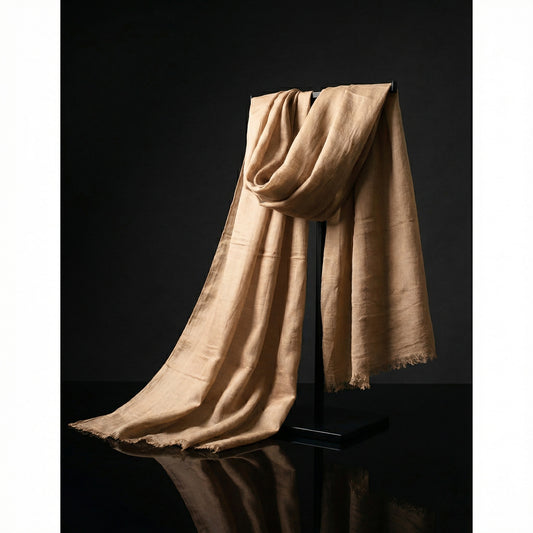
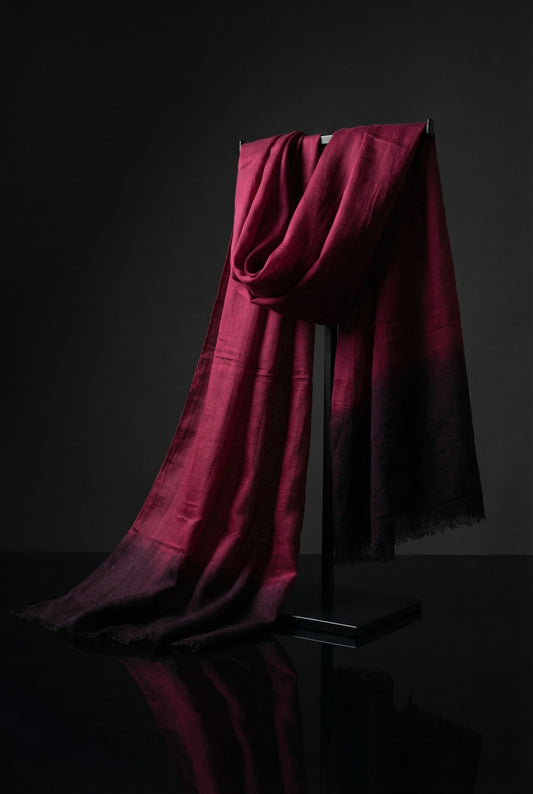
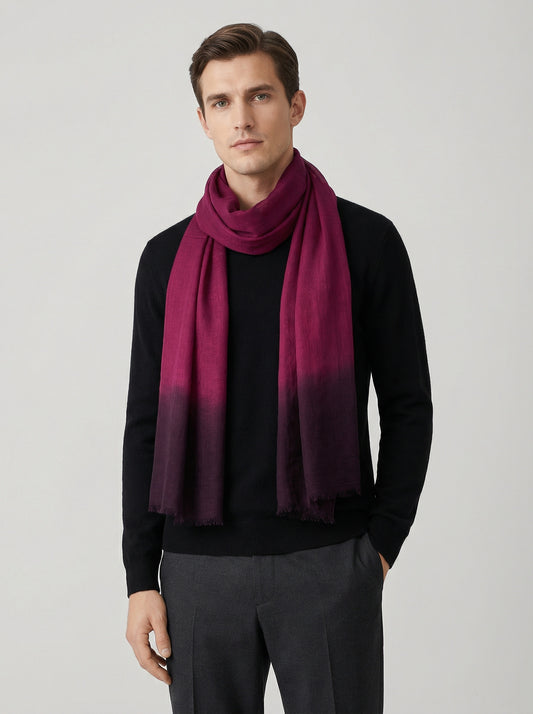
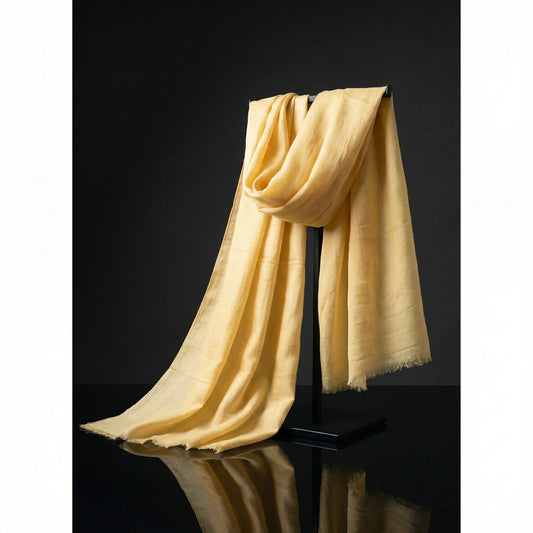
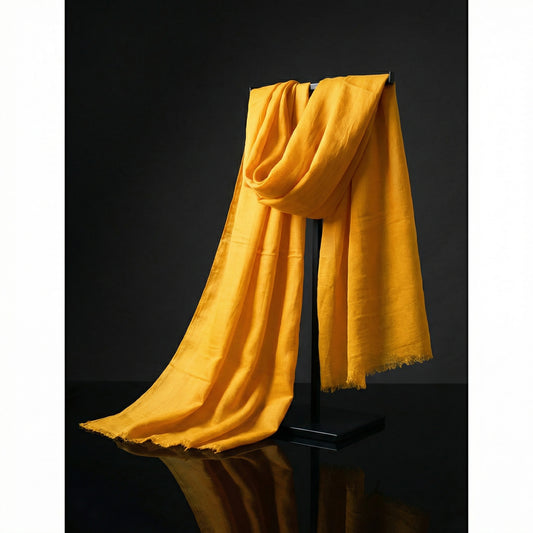
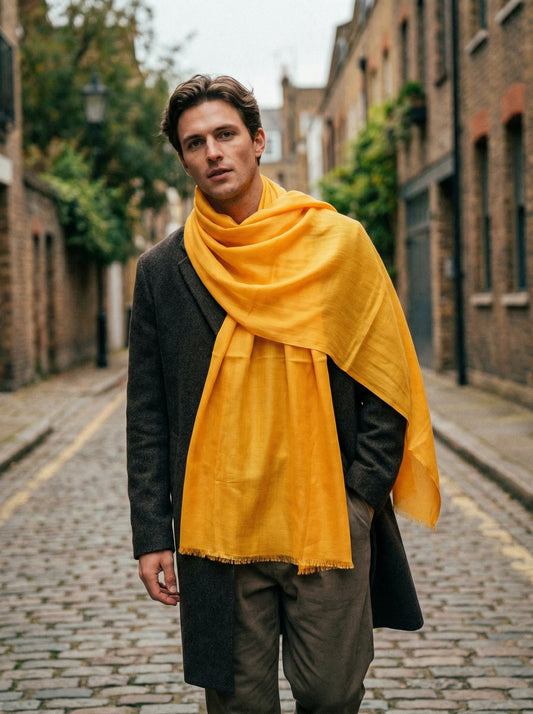
Rayon is a semi-synthetic fiber made from cellulose (wood pulp) that has become the preferred material for modern Tagelmust designed for everyday and travel use. Its qualities are remarkable: it is extraordinarily light (a 4-meter rayon Tagelmust can weigh under 200 grams), packs into an almost impossibly small bundle, drapes beautifully, and dries very quickly after washing.
Rayon breathes well in warm conditions and has a natural softness against skin. Its slight sheen also gives colors a particular richness. The one consideration with rayon is that it attracts heat in direct, still sunlight, but in the presence of airflow, it contributes to the evaporative cooling mechanism that makes the Tagelmust so effective in the desert.
💡 At DUNZ, rayon is our primary fabric choice for everyday and travel Tagelmusts. It delivers the lightness and packability that modern life demands while retaining the breathability and drape that makes the Tagelmust function as it should.
Silk and Silk Blends
Silk Tagelmusts occupy the luxury end of the spectrum. Silk is the most breathable of all natural fibers, extraordinarily soft against skin, and possesses a natural luster that makes colors appear deeper and more complex.
A silk Tagelmust is a genuine pleasure to wear, lighter even than rayon, cooler, and more delicate in appearance. It is, however, more fragile than other options and requires more careful care. Silk also tends to be significantly more expensive.
Silk blends, combining silk with cotton or rayon, offer a middle ground: the handle and luster of silk with greater durability and a more accessible price point.
What to Avoid: Polyester and Synthetic Fabrics
Polyester and other fully synthetic fibers are the wrong material for a Tagelmust, full stop. They trap heat rather than dissipating it, do not absorb moisture for evaporative cooling, feel plasticky against skin in warm conditions, and do not take natural dye — meaning the color is surface-applied and often lacks depth.
A polyester Tagelmust defeats the entire purpose of the garment. If a piece is described as polyester or if the fabric feels cool and slippery in the way synthetic fabrics characteristically do, look elsewhere.
How to Identify Fabric by Touch
• Cotton: slightly rough or matte texture, absorbs moisture immediately when a drop of water is placed on it, feels warm to the touch
• Rayon: smooth and slightly cool to the touch, slight sheen, lightweight, absorbs moisture slightly less quickly than cotton
• Silk: very smooth, almost liquid feel, natural luster that shifts with light, extremely lightweight
• Polyester: smooth and slightly cool like rayon, but with a consistent, uniform feel that lacks the slight irregularity of natural fibers; a small flame test would melt synthetic fibers rather than burning cleanly
How Material Affects Dye
This is important to understand, especially for indigo-dyed Tagelmust. Natural indigo is a surface dye, it adheres to the fibers rather than chemically bonding with them. This is why natural indigo fabrics release some color in initial washes; the excess dye that has not properly adhered is being removed.
Natural fibers (cotton, rayon, silk) absorb and hold natural dye far more effectively than synthetics. An indigo-dyed cotton or rayon Tagelmust will develop a beautiful patina over time — the color deepening where it is handled most and lightening slightly at folds and edges. This evolution is considered desirable by Tuareg wearers and by collectors of fine textiles.
Synthetic fabric cannot achieve this. Dye applied to polyester does not interact with the fiber in the same way; it sits on the surface more uniformly and does not develop the same character.
The Bottom Line: Fabric Recommendations
- For everyday urban wear and travel: rayon or rayon blend — light, packable, beautiful drape
- For the most traditional experience and durability: cotton or cotton blend — absorbs dye beautifully, softens with wear
- For luxury and special occasions: silk or silk blend — unmatched softness and breathability
- For desert travel specifically: rayon in dry heat, cotton in conditions where you might encounter moisture
- Avoid: polyester and fully synthetic fabrics in all contexts