People who have crossed the Sahara often describe its silence as something they’ve never experienced anywhere else. Not in forests. Not in mountains. Not even in snowy landscapes.
The silence of the desert is heavier, older, almost sacred, and this article explores why.
The Physical Science of Desert Silence
Sand Absorbs Sound (More Than You Think)
The desert is one of the planet’s largest natural sound absorbers. Each grain of sand is small, dry, and loosely packed. When sound hits these grains, the vibrations scatter and fade instead of bouncing back.
In forests or cities, sound reflects off hard surfaces — trees, walls, glass, stone. But in the desert, the ground literally swallows your footsteps. This is why you can walk a few meters away from someone and feel like you’ve stepped into another world.
Wind Shapes Sound, Not Just Sand
Wind is the desert’s orchestra.
When the wind is gentle, it creates a soft hiss.
When the air is perfectly still, total silence settles like a blanket.
When wind grows strong, dunes hum in low frequencies that nomads read like language.
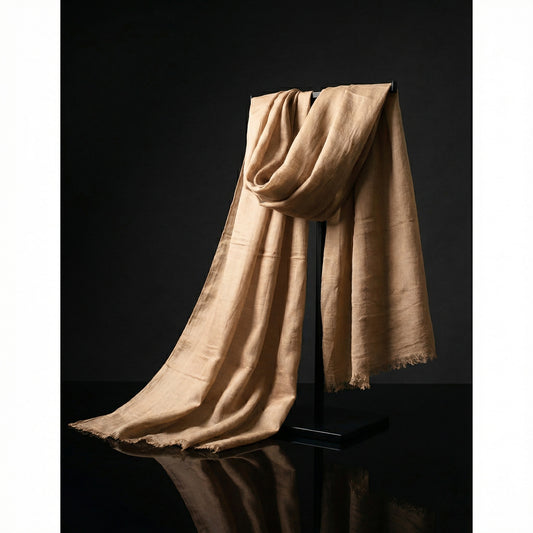
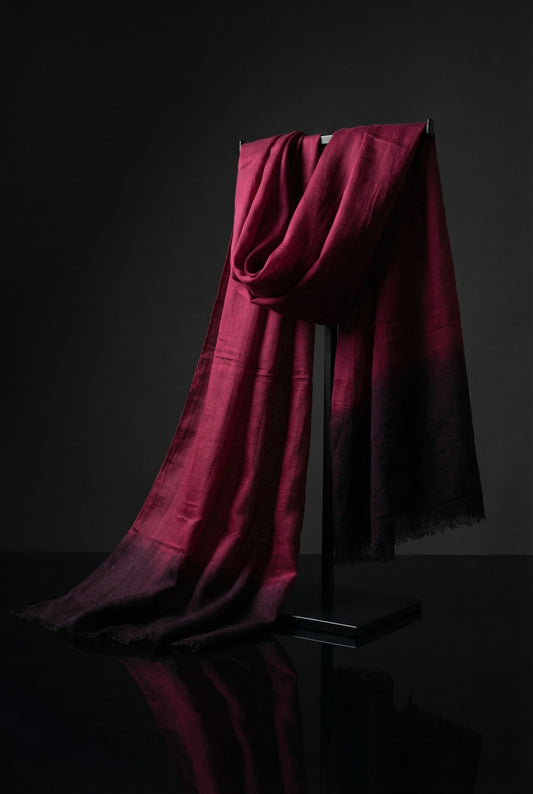
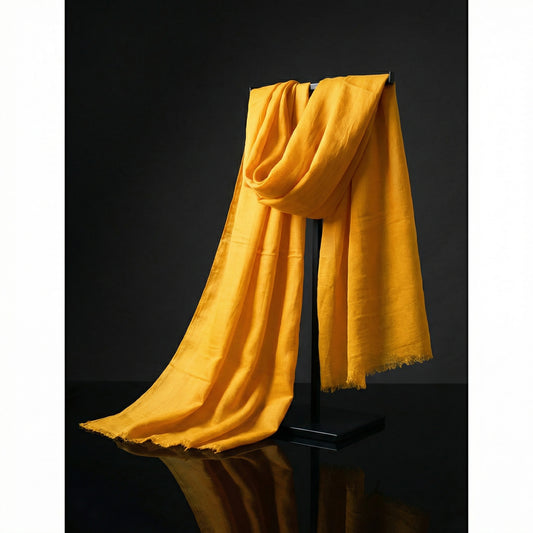
In fact, experienced nomads can predict tomorrow’s weather based on how the wind “sounds” at sunset. They also estimate wind direction by holding their usually black tagelmust up in the air, looking at how high it flies and which direction is takes.
The Emotional Power of Desert Stillness
Silence Creates Psychological Expansion
Your brain isn’t used to this kind of quiet. Modern life is filled with constant noise: traffic, phone notifications, voices, engines, neon hums. When all of that disappears, the mind expands.
This is why people say they “feel bigger” or “feel exposed” in the desert. There’s nothing to distract you from yourself, especially with your head being wrapped in Tagelmust.
Why Your Breath Sounds Loud in the Sahara
In the desert, your internal sounds become your environment.
Your heartbeat. Your breath. Your footsteps. The slight rustle of fabric.
All suddenly feel amplified.
You’re not really hearing more, you’re just hearing without competition.
The desert breaks this pattern. and this gives people awe, humility, stillness and a sense of smallness in front of the extraordinary.
For some, it’s comforting. For others, overwhelming. For most, unforgettable.
What Silence Means to Nomads
Silence as a Teacher, Not an Absence
For nomads, silence isn’t emptiness. It’s a presence. It’s a moment to listen to the wind, the horizon, the pulse of life around you. Silence is considered a companion, not a void.
The Spiritual Dimension of Quiet Spaces
In many desert cultures, silence is linked to spirituality.
It’s where prayers are whispered. Where decisions are made. Where travelers face themselves fully.
Nomadic poetry often speaks of “quiet journeys”; paths where silence reveals what noise hides.
Conversations Happen Softly
Nomads rarely raise their voices.
Speaking loudly in the desert feels unnecessary, almost disrespectful. Energy is conserved. Words are chosen carefully. Quiet is valued.
It’s said that in the Sahara, silence is a sign of strength, not weakness.
How to Experience Desert Silence Yourself
The Best Times to Listen: Dawn, Sunset, and Full Moon Nights
Dawn: the world begins breathing again
Sunset: warmth fades and winds slow
Full moon nights: absolute stillness + the softest silver light
Each moment is really a different “tone” of silence.
A Simple Ritual to Feel the Stillness
Try this next time you visit the desert:
Climb the highest dune around you.
Sit facing the wind, even if it’s soft.
Close your eyes for a moment.
Let your breath match the rhythm of the land.
Listen until you hear nothing — and then listen deeper.
It’s one of the purest human experiences.
What to Avoid
If you want to feel real silence, these are absolutes:
No phone
No music
No rushing
No talking
No trying to “capture” the moment
The desert rewards slowness and presence.
A Closing Reflection
People think silence is the absence of sound. But in the desert, silence is the presence of everything that matters.
Stillness. Breath. The ancient memory of the earth. The quiet strength of those who walked before you.
If you ever feel lost, go to the desert. Stand between dunes. Let the silence find you.
You’ll come back carrying a stillness that never leaves.