How Nomads Protect Themselves from Sun, Sand & Wind (and Why Tagelmust Scarves Matter)
In desert environments, long distances or terrain aren't the main threat, it's exposure.
Sun, wind, and airborne sand steadily degrade the body through dehydration, heat stress, eye irritation, and respiratory strain. That's why nomadic clothing systems evolved to mitigate these risks using simple, adaptable solutions rather than specialized gear.
This article explains how nomads protect themselves from environmental exposure, and why layered textiles, long dresses and especially Tagelmust scarves, remain central to desert survival.
The Three Primary Environmental Threats
1. Solar Radiation
Direct sun exposure causes:
- rapid dehydration;
- heat exhaustion;
- sunburn, and;
- impaired concentration
The desert offers little natural shade, making continuous protection absolutely necessary.
2. Wind
Wind accelerates three critical factors:
- moisture loss during daytime;
- heat loss at night, and;
- sand abrasion on skin.
Even mild wind becomes harmful over long exposure periods.
3. Sand and Dust
Fine sand particles, combined with wind speed create a plethora of problems:
- irritate eyes;
- inflame airways;
- damage skin, and;
- reduce visibility
Protection must be adjustable, breathable, and quickly deployable.
Why Nomadic Clothing Covers More Skin, Not Less
Counterintuitive but Effective
Unlike modern assumptions, exposing skin does not improve cooling in the desert. Loose, layered clothing:
- blocks direct sunlight
- traps a thin layer of cooler air
- reduces sweat evaporation
- stabilizes body temperature
Covered skin loses moisture more slowly.
The Scarf as a Modular Protection Tool
Why Tagelmust Scarves Are Central
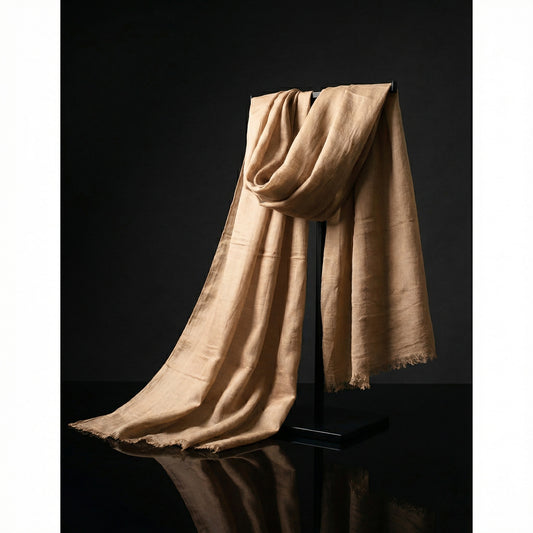
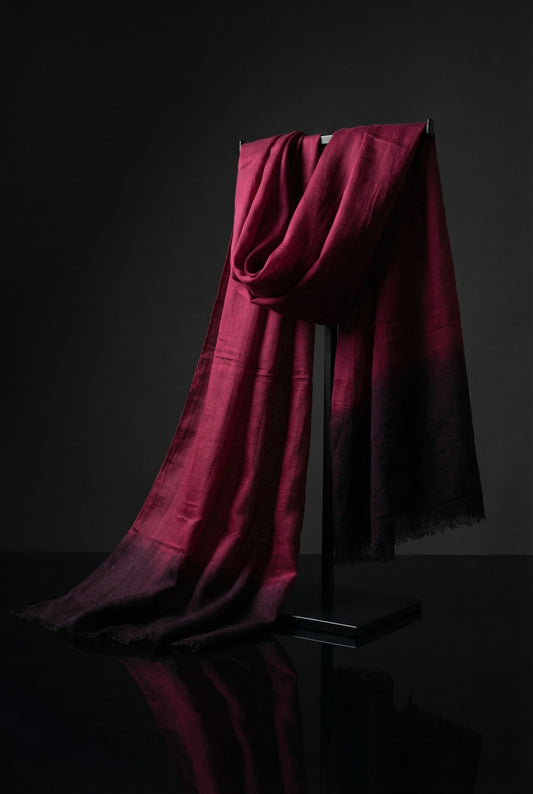
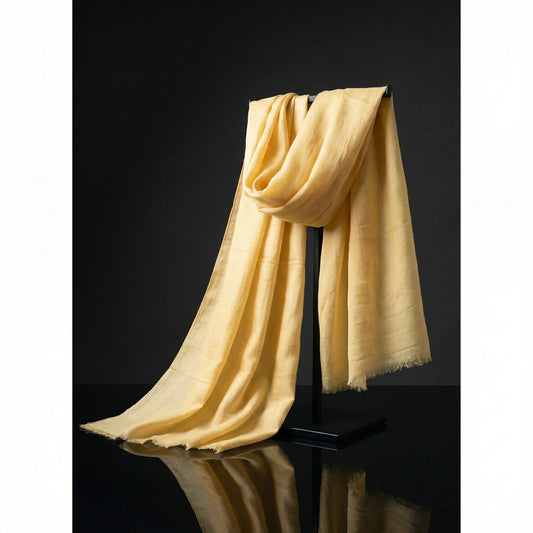
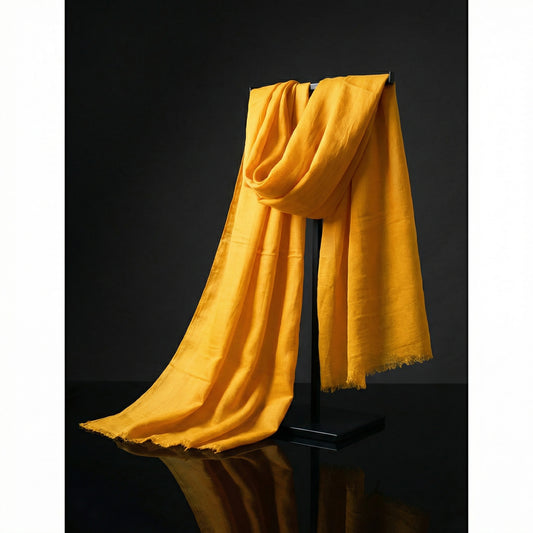
Tagelmust scarves are effective because they are lightweight, breathable, and multi-functional.
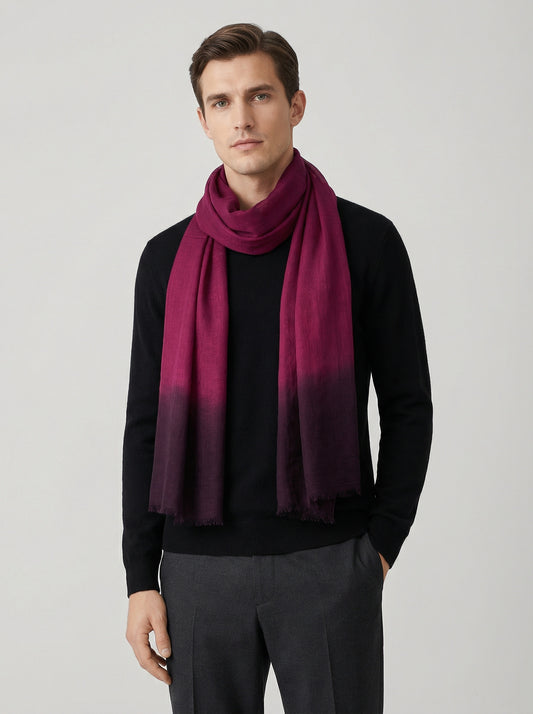
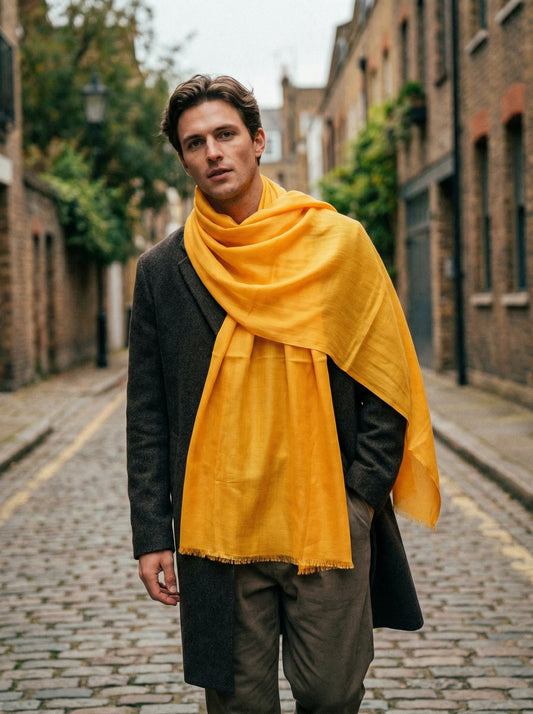
With it's typical length of 3-5 meters (about 16 feet), a single extra long Tagelmust can protect the head, neck, face and shoulders, and can be adjusted in minutes based on weather conditions.
Face and Airway Protection
When wind lifts sand, scarves cover forehead, ears, nose and mouth. The lightweight fabric filters large particles and makes breathing so much easier, and limits sensory fatigue during long travel.
Why Fabric Choice Matters
Breathability Over Thickness
Effective desert scarves are:
- tightly woven, but breathable
- light in weight
- capable of drying quickly
Heavy fabrics trap heat and moisture, increasing discomfort.
Color Considerations
Darker colors, like our smoke black tagelmust:
- absorb more heat
- but reduce glare
Lighter colors, typically Ghost white:
- reflect sunlight
- but show wear faster
Nomadic use balances practicality with availability.
Wind Direction Awareness
Scarves are used dynamically:
- tightened against headwind
- loosened when conditions ease
- repositioned as wind shifts
Protection is active, not static, your Tagelmust is re-shaped around your body all the time.
Why Tagelmust Scarves Outperform Modern Gear in Some Conditions
Modern protective equipment often:
- restricts airflow
- overheats the body
- lacks adaptability
Tagelmust scarves remain effective because they:
- require no setup
- work in multiple configurations
- integrate with other clothing layers
This explains their persistence despite technological alternatives.
Beyond Protection: Energy Conservation
Reducing exposure:
- preserves hydration
- reduces fatigue
- improves decision-making
In the desert, protection is not comfort — it is efficiency.
Conclusion
Nomadic protection systems prioritize adaptability over specialization. Scarves endure because they solve multiple problems simultaneously:
- sun
- wind
- sand
- temperature variation
They are not accessories.
They are tools refined through repeated use in extreme conditions.
Understanding this shifts how desert clothing should be evaluated, by function, not appearance.