Is Tagelmust Only Worn by Men, Or Do Women Wear It Too?
![]() Is It Only Worn by Men?
Is It Only Worn by Men?
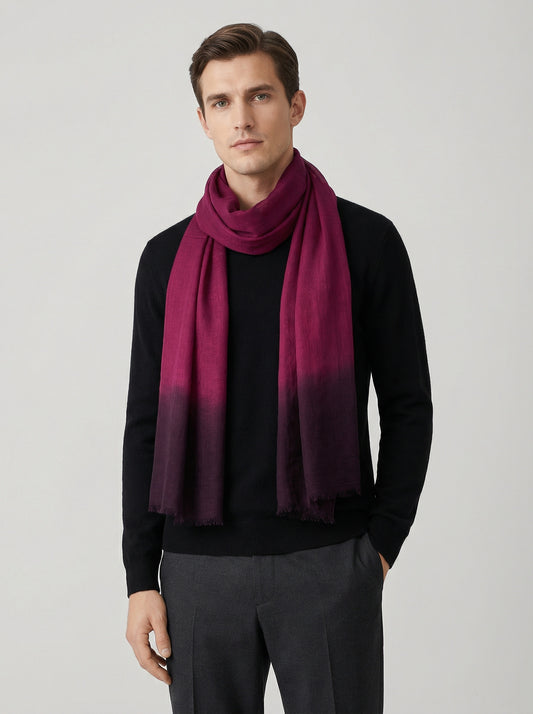
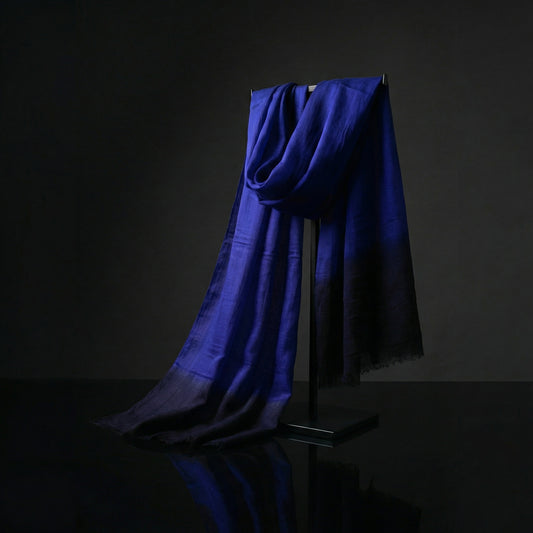
The Tagelmust is traditionally a male garment among the Tuareg people. However, since the adoption of Tagelmust in french fashion, women started wearing it with modern clothing. Historically, Tagelmust is worn by men as a rite of passage into adulthood, it serves as a face veil, head covering, and symbol of dignity and identity, with its indigo dye often staining the skin to earn them the moniker "Blue Men".
Documented by anthropologist Susan Rasmussen in The Tuareg: Portrait of a Nomadic People (1996), the Tagelmust symbolizes the masculine roles in nomadic herding and trade, while women, having greater visibility and autonomy in social interactions, typically wear a comparable yet distinct outfit known as the Toungou, also referred to as Tassaghnist, Melhfa, Laffaya, or Dampé.
Do Women Wear It Too?
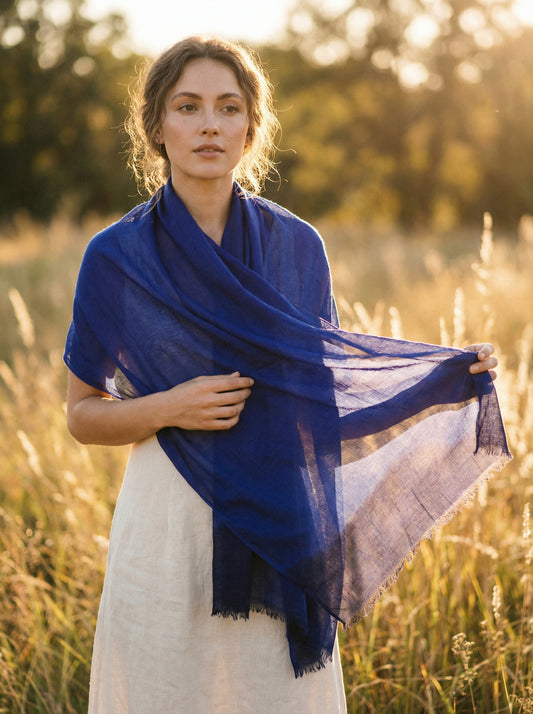
Toungou is a large traditional garment, shaped as a rectangular cloth, typically measuring about 2 by 5 meters, made from lightweight cotton or a cotton-wool blend, often dyed in vibrant indigo hues sourced from ancient trans-Saharan trade routes dating back to the 11th century.
Worn draped over a long, colorful underdress (roba), the Melhfa envelops the body from shoulders to ankles, secured with silver jewelry or brooches that signify clan affiliation and personal status. The Melhfa's status as the go-to outfit for nomadic Tuareg women stems from its unparalleled practicality in the Sahara's extreme environment, combined with deep cultural and social resonance. Primarily, it provides essential protection against the desert's punishing elements: the loose, flowing fabric shields from blistering daytime sun (reaching 50°C/122°F), swirling sandstorms, and frigid nights dipping below freezing, while its breathable material wicks away sweat during long migrations.
Its versatility is legendary women repurpose it as a sling to carry infants or goods, a makeshift tent for shelter, or even a filter for purifying air or water, making it indispensable for the semi-nomadic lifestyle centered on herding goats, camels, and cattle across vast, unforgiving terrains.
Culturally, the Melhfa embodies female empowerment and identity in a society where women hold significant influence. The garment's quality and indigo saturation often indicate a woman's marital status, her husband's wealth, and her own livestock holdings, which form the backbone of female economic power in Tuareg matrilineal inheritance systems.
Elaborate silver adornments necklaces, bracelets, and fibulae etched with Tifinagh script further amplify this, serving as talismans for protection and markers of beauty rituals like henna tattoos and kohl eyeliner.
History Fact
During the devastating Sahel droughts of the 1970s and 1980s, which decimated Tuareg herds and forced mass migrations southward into cities like Niamey and Bamako. In these exoduses, women clad in their indigo Melhfas led family caravans on foot across hundreds of kilometers, using the fabric to bundle dwindling possessions, swaddle malnourished children against dust-choked winds, and even barter scraps for food at oases. As recounted in Tuareg Migration: A Critical Component of Crisis in the Sahel by Migration Policy Institute (2013), these resilient "Desert Queens" not only preserved clan cohesion amid famine and displacement—displacing over 100,000 Tuareg—but also adapted the garment for urban survival, transforming it into a symbol of unyielding matriarchal strength that fueled later independence movements.
Sources:
- Wikipedia. (n.d.). Melhfa. Retrieved from https://en.wikipedia.org/wiki/Melhfa [web:0, web:10].
- Gunning, V. (2025). Desert Queens: The Most Beautiful and Resilient Women on the African Continent. Vivienne Gunning Blog .
- The Colorful Cloth. (2023). The Exquisite Beauty of Tuareg Fabrics. .
- Fischer, A. (n.d.). Clothing - Imuhar (Tuareg). Imuhar.eu [web:6, web:14, web:22].
- Study.com. (n.d.). Tuareg People: History, Clothes & Culture. .
- Wikipedia. (n.d.). Tuareg People. .
- Bradshaw Foundation. (n.d.). The Tuareg: Nomadic Inhabitants of North Africa. .
- JINHA Agency. (2022). Tuareg Women Play Prominent Roles in Social Life. .
- Rasmussen, S. (2016). Susan Rasmussen on the Tuareg. Afropop Worldwide .
- Migration Policy Institute. (2013). Tuareg Migration: A Critical Component of Crisis in the Sahel. .
- Rasmussen, S. (1996). The Tuareg: Portrait of a Nomadic People. Rosen Publishing.