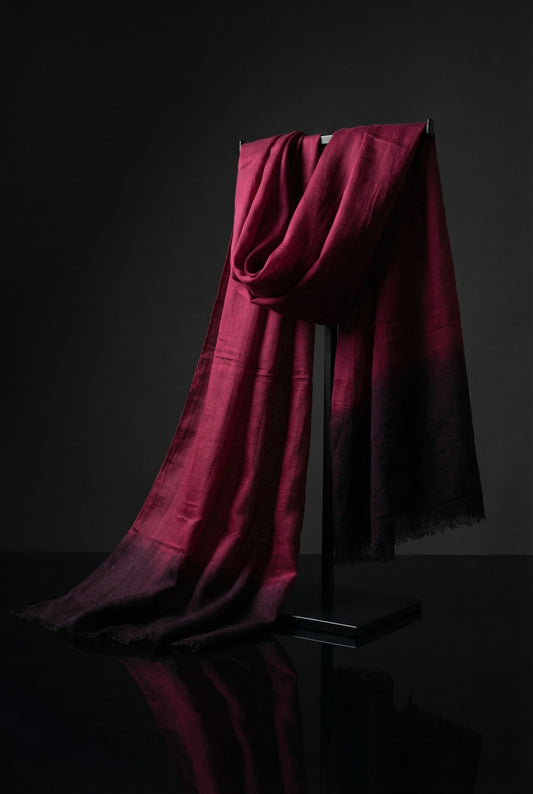
What is the Cultural Significance of the Tagelmust for the Tuareg People?

The Cultural Significance of the Tagelmust
The Tagelmust holds profound cultural significance for the Tuareg people, an indigenous Berber group also known as the Imazighen, reflecting their identity, status, and resilience.
The Tagelmust was worn primarily by men after reaching adulthood, it marks a rite of passage and signifies dignity, with the indigo dye staining the skin blue—a badge of honor earning them the "Blue Men" title. According to The Tuareg: Portrait of a Nomadic People by Susan Rasmussen (1996), the scarf’s design, often adorned with tribal patterns, denotes clan affiliation and social standing, serving as a non-verbal communicator in a society with a rich oral tradition.
The Philosophy Of Endurance
Beyond aesthetics, the Tagelmust embodies the Tuareg philosophy of endurance and purpose, as outlined in their oral histories documented by anthropologist Jeremy Keenan (The Tuareg: People of the Sahara, 2004). It symbolizes a steady course through life’s adversities, from desert hardships to colonial oppression. Historically, it played a role in resistance; during the 1916-1917 Kaocen Revolt against French colonial rule in Niger, Tuareg warriors used it to conceal their faces, a tactic noted by Charles de Foucauld in Reconnaissance au Maroc (1888), enhancing their mystique and strategic advantage.
The scarf also reinforces gender roles, with men wearing it publicly while women traditionally use lighter versions indoors, though this varies by region. Its cultural weight is further evidenced by its preservation through generations, despite modern challenges like urbanization, as detailed in Cultural Survival Quarterly (Vol. 28, 2004).
Sources:
- Rasmussen, S. (1996). The Tuareg: Portrait of a Nomadic People. Rosen Publishing.
- Keenan, J. (2004). The Tuareg: People of the Sahara. I.B. Tauris.
- Charles de Foucauld, C. (1888). Reconnaissance au Maroc.
- Cultural Survival Quarterly, Vol. 28 (2004).